
Last Updated on February 6, 2026 by The HD Post Staff
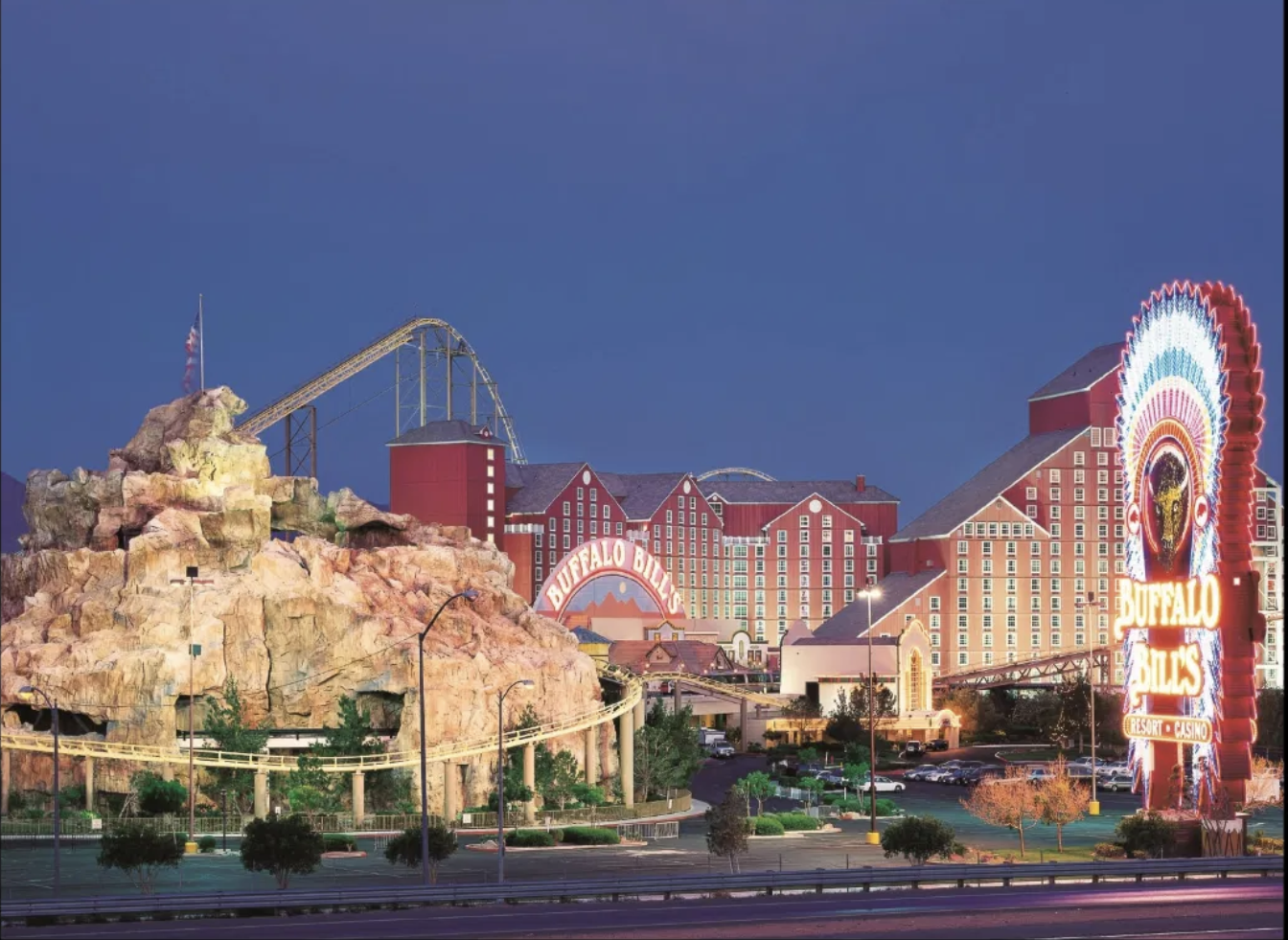
For decades, Primm, Nevada — a tiny community straddling the California state line — depended on roadside casinos and hospitality jobs to fuel local life.
But in recent years, the town’s economic foundation has been shaken by a series of major closures and scaled‑back operations.
Once home to three major casino resorts on Interstate 15, Primm has seen two of those iconic properties either shutter or suspend full‑time operations.
Whiskey Pete’s closed in late 2024, and Buffalo Bill’s ceased regular operations in mid‑2025 under a plan that could keep it closed for at least two years.
Only Primm Valley Resort & Casino remains open daily, serving as a key economic anchor for the town — a modern echo of the “company town” model that once shaped much of America’s industrial landscape.
Where one employer drives most local jobs, businesses sometimes step in to provide housing and services to support employees.
One example is Primm Valley Resorts’ careers page, which advertises not only job openings but also on‑site, fully furnished apartments for employees, with rents described in terms of pay periods (e.g., $180 per pay period).
The properties also offer recreational amenities such as a market, laundry facilities, a recreation room, basketball court, swimming pool, and fitness center.
While employee housing has existed in Primm for years, recent closures have increased its importance for remaining operations.
These housing and amenities harken back to the “company town” era, when employers built homes and services around workplaces.
While those historic models were often criticized for tight‑fisted control over workers’ lives, modern versions tend to emphasize quality of life, convenience, and community stability.
Workforce housing on the rise
Across the U.S., similar dynamics have cropped up where employers fill gaps in housing markets and local infrastructure.
Vail Resorts in Colorado has taken steps to address workforce housing challenges in its resort communities, including plans for a 165‑employee housing project in East Vail and other investments to support affordable employee housing in the region.
In Primm, the closures of once-busy casinos and attractions have shrunk the job pool and left fewer reasons for visitors to stay.
By combining employer-supported housing, recreation, and work, Primm Valley Resorts shows how a single employer can help stabilize a community in transition.
Whether the town can fully reinvent itself remains uncertain, but stakeholders are optimistic that the new Southern Nevada Supplemental Airport (SNSA) will bring renewed visitors and economic activity.
For more information about Primm Valley Resorts opportunities, visit https://primmvalleyresorts.com/careers/
RELATED: Buffalo Bill’s Casino on the California-Nevada border closes indefinitely