Last Updated on January 8, 2026 by The HD Post Staff

CALIFORNIA — On January 7, U.S. Department of Agriculture Secretary Brooke Rollins and Department of Health and Human Services Secretary Robert F. Kennedy Jr. unveiled a reset of federal nutrition policy.
They called on Americans to “eat real food” and put nutrient-dense, whole foods at the center of the new dietary framework.
According to the USDA, nearly 90% of health care spending goes toward treating chronic disease, much of it linked to diet and lifestyle. More than 70% of American adults are overweight or obese, and nearly 1 in 3 adolescents has prediabetes.
Diet-related chronic diseases now disqualify many young Americans from military service, which officials say threatens national readiness and limits opportunity.
The updated Dietary Guidelines for Americans, 2025–2030, emphasize protein, healthy fats, fruits, and vegetables while urging Americans to limit added sugars, highly processed foods, and artificial additives.
The new food pyramid illustrates these priorities, aiming to reduce diet-related chronic illnesses nationwide.
“These Guidelines return us to the basics,” Kennedy said.

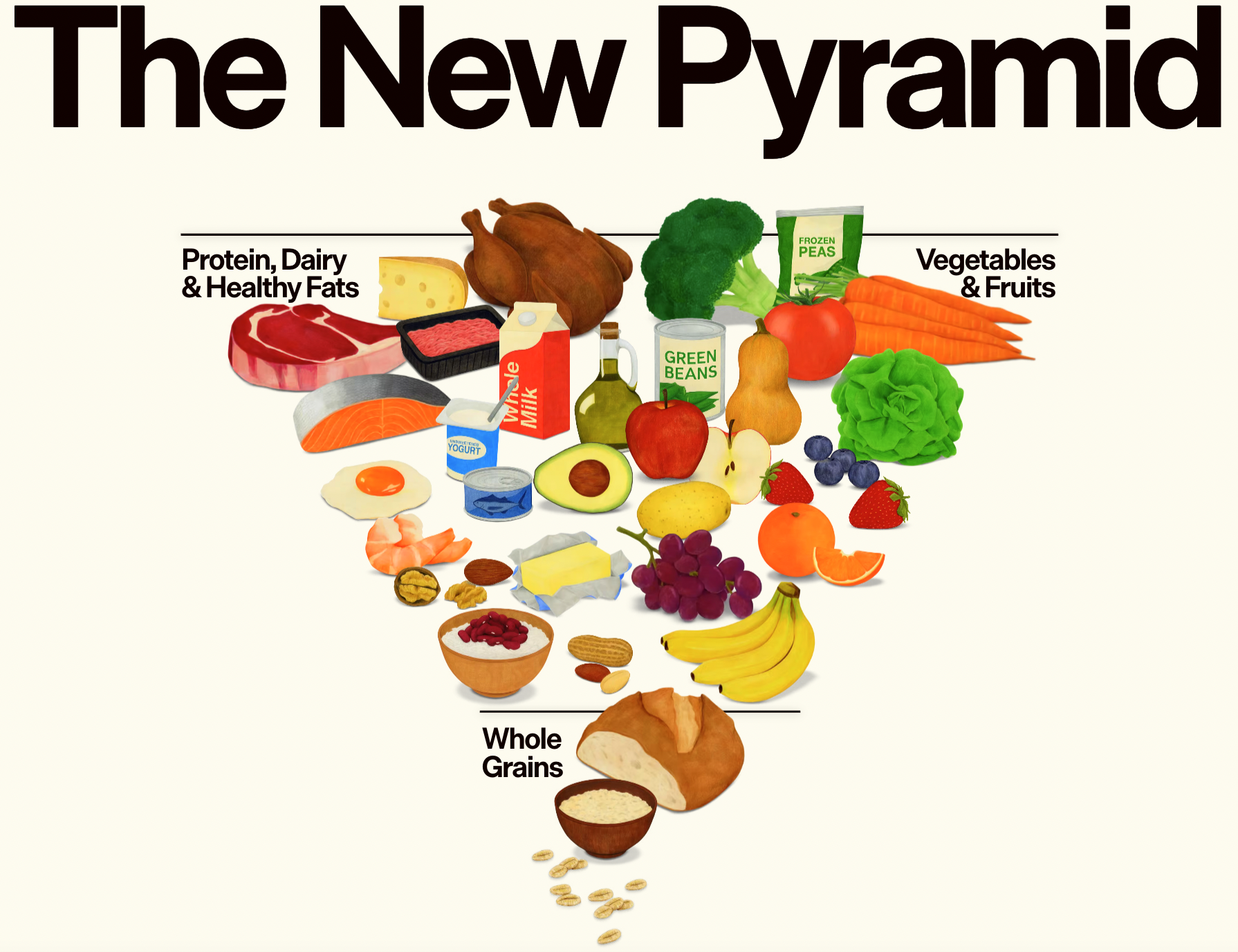 Photo credit: USDA
New guidelines align with California
The federal guidelines align with initiatives California officials have been advancing.
The state has passed laws such as AB 418, also known as the California Food Safety Act. The law bans the manufacturing, sale, and distribution of food products containing four specific chemical additives: red dye 3, brominated vegetable oil (BVO), potassium bromate, and propylparaben.
The ban will take effect on January 1, 2027, due to health risks associated with these chemicals, including cancer and hyperactivity.
AB 1264 phases out ultra-processed foods in California schools by 2035.
California’s Farm-to-School program further ensures that public school students receive meals made from locally grown, fresh ingredients, reinforcing a focus on nutrient-dense foods.
In addition, California’s nutrition standards for schools and other institutional programs include protein as a core food group, requiring meals to feature protein foods such as meat, eggs, beans, and dairy.
Federal guidelines provide recommendations for all ages
The new federal guidelines provide nutrition advice for all life stages, from infants to older adults, including pregnant women and vegetarians.
RELATED: Tortillas in California will soon require folic acid