

 Photo credit: CDFW
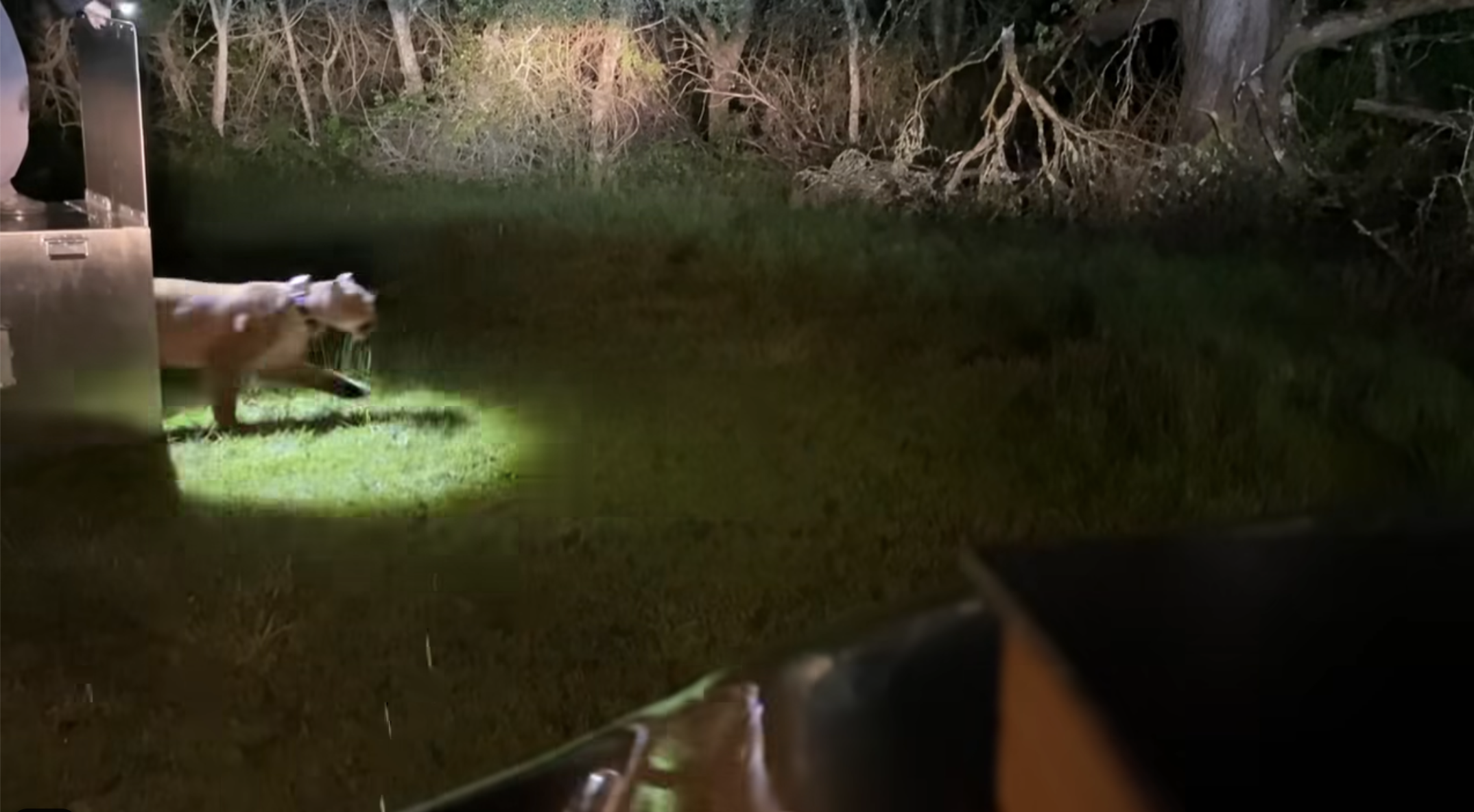
CALIFORNIA – The California Department of Fish and Wildlife (CDFW) announced January 28 that it returned a mountain lion to its natural habitat after the young cat was found in an urban area of San Francisco.
CDFW wildlife officers responded to reports of mountain lion sightings in San Francisco’s Pacific Heights neighborhood and located the animal Tuesday in a narrow space between buildings.
With no clear route out of the city, the mountain lion required human intervention to safely leave the area.
CDFW wildlife biologists and San Francisco Zoo veterinarians responded and chemically immobilized the mountain lion to safely capture, transport, and return it to suitable habitat.
With assistance from San Francisco Zoo veterinarians and a UC Santa Cruz Puma Project researcher, CDFW biologists assessed the mountain lion and determined it was a healthy male weighing 77 pounds and estimated to be about 2 years old.
The mountain lion was fitted with a GPS tracking collar as part of the UC Santa Cruz Puma Project.
Released to the Santa Cruz Mountains
Male mountain lions typically disperse from their mothers around age two to establish their own territory.
According to CDFW, mountain lions typically avoid humans and populated areas but may rarely enter cities while searching for food or other resources. In most cases, they return to open spaces on their own, though some require assistance.
Additional agencies assisting in the response included San Francisco Animal Care and Control and the city’s fire and police departments. The mountain lion showed no aggression toward responders.
CDFW said it released the mountain lion into suitable habitat in the Santa Cruz Mountains, which span more than 1,000 square miles.
If you encounter a mountain lion
CDFW says if you encounter a mountain lion, make noise, wave your arms, and try to scare it away.
Never approach a mountain lion; back away slowly instead. Keep children and pets close. In the event of a public safety threat, dial 911.
CDFW asks that mountain lion sightings and encounters be reported via the Wildlife Incident Reporting System: https://apps.wildlife.ca.gov/wir. The system is monitored, and reports are responded to as needed.

 announced January 28 that it returned a mountain lion to its natural habitat after the young cat was found in an urban area of San Francisco.)